Etsy / How the Marketplace Works for Handmade and Digital Products
Etsy is a global online marketplace where independent sellers can offer handmade goods, vintage items, craft supplies, personalized products, and digital downloads. Unlike a conventional mass-market store, Etsy focuses on distinctive products created, designed, curated, or sourced by individual sellers and small businesses.
This guide explains what Etsy is, what you can sell, how listings and fees work, and which types of sellers are most likely to benefit from the platform.
What is Etsy?
Etsy is an online marketplace that connects independent sellers with buyers looking for distinctive products.
According to Etsy, sellers may offer physical or digital products that they have made, designed, curated, or sourced within the platform's rules. A buyer purchases from the individual shop listed on Etsy, not directly from Etsy as the merchant.
The basic flow is:
Seller lists a product on Etsy ??buyer finds and purchases it ??seller delivers the physical item or digital file
Etsy resembles marketplaces such as Amazon in that it connects sellers and buyers. Its emphasis, however, is on creative work, handmade and personalized products, vintage goods, craft supplies, and design-led items.
Etsy was founded in 2005 and is headquartered in Brooklyn, New York.
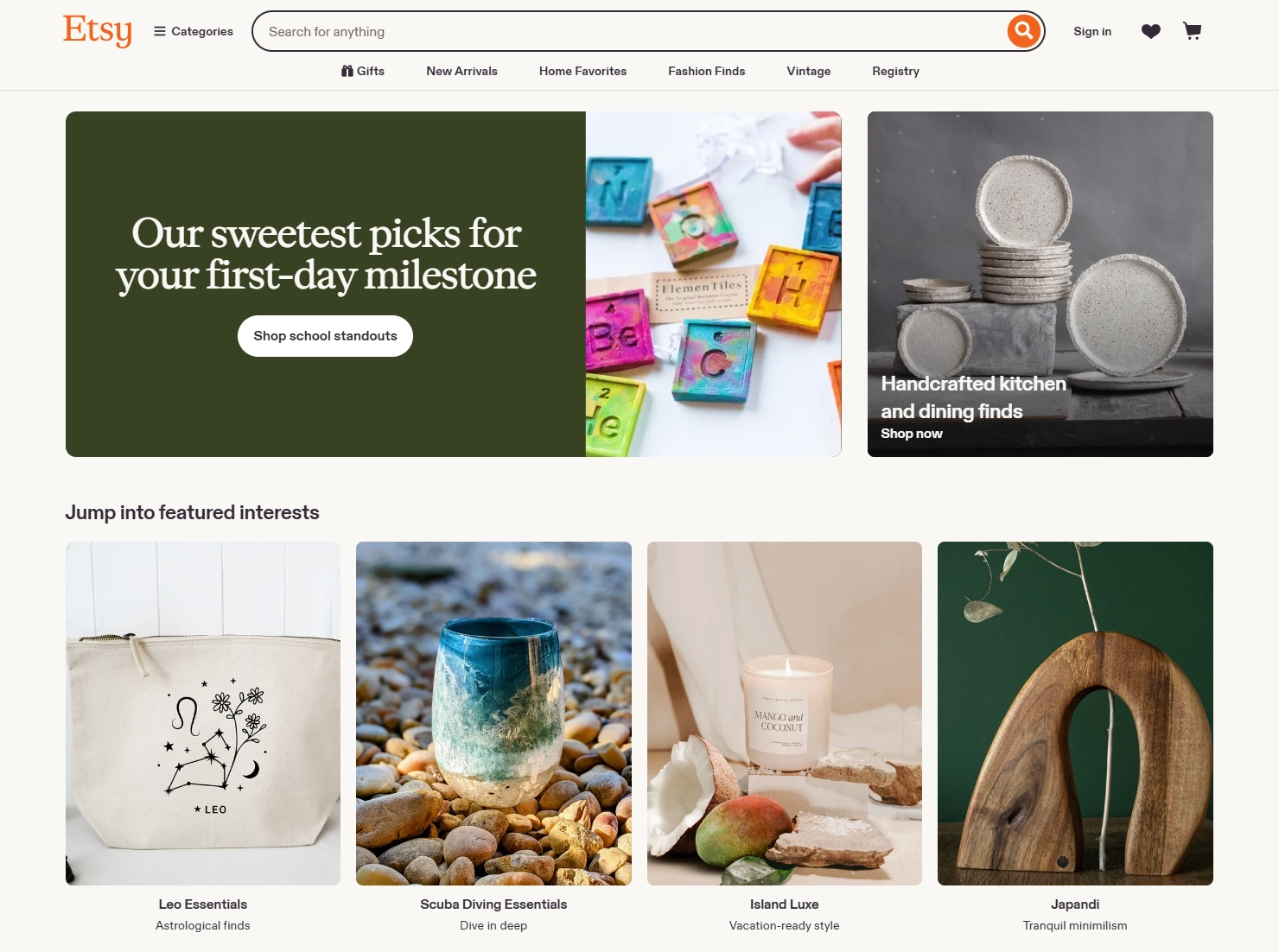
How large is the Etsy marketplace?
Etsy is much larger than a niche handmade-goods website. Etsy's 2025 annual report says that the Etsy marketplace had approximately 86.5 million active buyers and 5.6 million active sellers as of December 31, 2025.
The marketplace offered more than 100 million items, and its 2025 gross merchandise sales (GMS) were approximately $10.5 billion. About 30% of Etsy's 2025 GMS came from custom or made-to-order merchandise, underscoring how the marketplace differs from online stores built mainly around standardized products and the lowest price.
What can you sell on Etsy?
Common product categories include:
- Handmade accessories and jewelry
- Home and living products
- Clothing and fashion accessories
- Crafts and craft supplies
- Wedding and party products
- Toys and games
- Vintage goods
- Made-to-order products
- Personalized gifts
- Digital design products
In 2025, Etsy's largest categories included Home and Living, Jewelry and Personal Accessories, Apparel, Craft Supplies, Paper and Party Supplies, and Toys and Games. Before listing any item, check Etsy's current creativity standards and prohibited-items policy because eligibility depends on how the product was made, designed, curated, or sourced.
Can you sell digital products on Etsy?
Yes. Digital products are a major reason creators consider Etsy. A downloadable file does not require physical inventory or international shipping, so it can reduce much of the fulfillment work associated with physical goods.
Examples include templates, printable designs, and original graphic resources. A file that you create once may be sold repeatedly, but that does not make every digital product eligible or profitable. You still need to confirm that the work complies with Etsy's current seller policy and that you have the necessary rights to every included asset.
For designers and content creators who want to reach international customers, digital products can provide a practical entry point. The initial work shifts toward research, product design, listing images, customer instructions, and ongoing support.
How does selling on Etsy work?
First, create a seller account and open an Etsy shop. Add product photos or preview images, a clear title and description, a price, delivery information, and other required listing details. When a buyer discovers the item through Etsy search and places an order, the seller fulfills it.
A physical order requires production or sourcing, packaging, and shipping. An eligible digital product may be delivered as an automatic download, depending on the listing type.
Listing a product does not guarantee sales. Etsy is a search-driven marketplace, so product images, thumbnails, titles, tags, descriptions, prices, reviews, and fulfillment quality all affect how buyers evaluate a listing.
What is Etsy SEO?
Etsy search engine optimization, or Etsy SEO, is the process of improving a listing so that relevant buyers can find it in Etsy search.
Instead of relying on broad terms, identify the language a buyer would use for a specific product, recipient, occasion, style, or use case. Apply those phrases naturally to the title, tags, attributes, and description where they accurately describe the item.
A sustainable Etsy listing combines several elements:
Product research + keyword research + strong product images + an accurate title + a useful description + sensible pricing + customer service
In competitive categories, focused phrases with clear purchase intent may be more useful than a single broad keyword. This resembles the use of long-tail keywords in web search optimization.
What fees does Etsy charge sellers?
Check Etsy's current fees before setting a price. At the time covered by the source article, Etsy's help documentation listed a $0.20 listing fee per item. A listing generally remains active for four months, and renewing it may trigger another listing fee.
When an item sells, Etsy generally charges a 6.5% transaction fee on the order amount. Etsy Payments processing fees are separate and vary by country. Depending on the seller and transaction, advertising, currency conversion, regulatory, or other charges may also apply.
Orders attributed to Etsy Offsite Ads can carry an additional advertising fee. Etsy's published guidance stated that the rate was 15% for shops with less than $10,000 in Etsy sales over the previous 365 days and 12% for shops at or above that threshold.
Because policies and rates can change, verify the latest figures in Etsy's official seller documentation before opening a shop or calculating margins. Include every expected platform and fulfillment cost rather than pricing from production cost alone.
Advantages of selling on Etsy
The main advantage is access to a global audience without first building a standalone international store. An independent site requires its own payment setup, traffic acquisition, advertising, and trust signals. Etsy already has buyers actively searching for products.
The marketplace also has strong demand for differentiated products. Handmade work, personalized gifts, distinctive design, and custom orders can compete on relevance and originality rather than price alone. In Etsy's 2025 buyer survey, approximately 81% of respondents said Etsy offered items they could not find elsewhere.
For digital goods, there is the additional advantage of avoiding physical inventory and shipping for eligible automatic downloads.
Disadvantages of selling on Etsy
Etsy is not an effortless sales channel. Competition is the first challenge: with more than 100 million items listed, adding a few products does not automatically generate traffic or orders.
Sellers must continually improve thumbnails, photography, keywords, prices, descriptions, and customer service. International selling may also require English-language listings and support for customers in other countries.
Physical-product sellers must account for shipping cost and delivery time, loss or damage, customs issues, and returns. Platform fees also mean that revenue and net profit can differ substantially.
Who is Etsy best suited for?
Etsy is a strong fit for sellers who make handmade products, create original designs, offer personalized or made-to-order goods, sell qualifying vintage items, or want to reach international customers with digital downloads.
It may be a poor fit for a business that simply sources generic mass-produced goods and competes almost entirely on price. Etsy's marketplace identity favors originality, design, personalization, and a clear connection to the creator or curator.
How is Etsy different from a conventional online store?
On a broad marketplace, price, fast shipping, and familiar brands are often dominant purchase criteria. Etsy buyers are more likely to begin with a need for a distinctive design, personalized item, or gift.
In Etsy's 2025 buyer research, approximately 31% of recent visitors said they were looking for a custom or personalized item, while about 29% were looking for a gift. Sellers should therefore focus on a well-defined customer and use case instead of copying products already common across general marketplaces.
Can you make money on Etsy?
It is possible, but uploading products alone does not create a reliable business. Begin by researching demand and competition before producing a large catalog.
A practical sequence is:
Choose a product idea ??study Etsy search results ??analyze competing listings ??research keywords ??create the product ??build the listing ??publish it ??review sales data ??improve the product and keywords
Digital products can benefit from repeat sales after the initial creation work, but simple designs may be easy to imitate and can lead to price competition. A clearer audience, purpose, or style gives a product a more defensible position.

Etsy / How the Marketplace Works for Handmade and Digital Products
Understand how Etsy connects independent sellers with global buyers, what products are eligible, how digital downloads work, and which fees and tradeoffs sellers should consider.