Blogging in the AI Era: A Practical Content and Traffic Strategy
To keep a blog valuable in the age of AI search, do more than summarize information that readers can find anywhere. Turn verifiable facts, first-hand observations, and clear judgment into guidance people can actually use. Keep the site easy for search engines to discover, but also give visitors a reason and a way to return. This guide explains how blog owners can rethink new content, existing posts, traffic sources, and measurement.
AI search changes why readers visit a blog
A search-results summary may answer a short definition or a familiar tip. That does not make blogs obsolete. A reader working through a complicated setup, weighing options with different constraints, or fixing a specific error may still need details a general summary cannot provide. This is a way to decide where to invest your effort, not a prediction that every blog will see the same traffic change.
Google's guidance on generative AI features in Search says that foundational search engine optimization (SEO) practices still matter. It also encourages useful, distinctive content rather than recycled summaries. You do not need a special AI-only file or markup just to appear in Google's AI search features. Other services may work differently, and following any set of recommendations cannot guarantee visibility or visits.
What gives readers a reason to visit your site?
The useful distinction is not simply whether a human wrote a page. It is whether the page offers verifiable information that is difficult to get from a generic summary. Before choosing a topic, decide which of the following kinds of value you can provide.
Show a process and result you actually checked
For a setup guide, the menu path, real screens, chosen options, expected result, and a way to recover from failure can all matter. For a comparison, explain the conditions you used and the limits of your findings; that is more helpful than a generic pros-and-cons list. An analytics installation guide, for example, should go beyond “add the code.” It can explain where to place it, what signal to look for in a real-time report, and what to check if no data appears. Never present a test you did not run as your own experience.
Read primary sources and explain when they apply
Not every topic lends itself to a hands-on test. You can still add value by separating what an official document confirms from who it affects, what exceptions exist, and what the reader should do next. Instead of stopping at “the policy changed,” explain which sites are covered, which existing settings to review, and what remains uncertain. Google's people-first content self-assessment likewise asks whether a page offers original information or analysis and a substantial explanation.

Change how you make each new post
This is not an argument against using AI. AI can help organize research and shape a draft, but the facts and conclusions a reader relies on still need deliberate verification. The following process is especially useful for setup guides, troubleshooting articles, and comparisons.
- Narrow the question. Instead of “blog SEO,” address a situation such as “what to check first when a new post does not appear in Search.” Do not create a separate page for every small variation of the same query.
- Check existing posts and primary sources. See whether your site already answers the question. Verify product features, policies, and figures against current official documentation or original data. Improve an existing page when it can serve the same intent; do not add another URL without a reason.
- Add evidence of your own or clarify the source evidence. If you ran a test, record the environment, date, method, result, and relevant screens or errors. If you did not, compare primary sources, explain their conditions and exceptions, and label your inferences as inferences.
- Help the reader finish the task. Give the answer first, then cover prerequisites, steps, decision points, ways to confirm the result, and places people commonly get stuck. Skip filler and FAQs that do not resolve a real follow-up question.
- Verify anything AI helped produce. Recheck menu names, prices, dates, source links, and image descriptions. Remove repeated phrasing and any invented claim of personal experience.
Google says generative AI can help with research and structuring original content, while mass-producing pages without adding value may violate its spam policies. The issue is not the mere use of AI, but whether the finished page is accurate, original, and useful. For a closer look at the policy distinction, read our analysis of whether mass-produced AI content faces a search penalty, alongside Google's guidance on generative AI content.
Sort your existing posts before adding more
Existing posts do not all need to be rewritten, and they should not all be deleted. Classify them by whether they still match the reader's intent and whether their information remains valid. That gives even a small team a practical way to prioritize work.
| Decision | Which posts fit? | What to do |
|---|---|---|
| Keep | The main answer remains correct and the post satisfies the reader's goal. | Periodically check things that can change, such as links, screens, and policies. |
| Improve | The post matches the search intent, but its explanation, evidence, screens, or exceptions are thin or outdated. | Update the same URL with meaningful changes, including how to confirm results and handle common failures. |
| Consider consolidation | Several posts repeatedly answer nearly the same question. | Reduce overlap around the most suitable page. Check traffic and redirects before removing or changing any URL. |
Do not prioritize only the posts with the most search visits. A page with modest traffic may still contribute to subscriptions, inquiries, or purchases. Conversely, if a page gets impressions but few clicks, check whether its title and body answer the same question as the queries shown in Search Console before editing the title alone. A cosmetic date change does not make a post more useful.
Give search visitors a path back
Search is a discovery channel, not the whole relationship with a reader. Add a relevant link where it helps someone continue solving a related problem, and make your site's main topics clear in its navigation and categories. The aim is to make the next useful action easier, not to increase the number of links.
If you use an email newsletter or another channel, first decide why a visitor would want to return. Useful updates might include an explanation of a policy change in your niche, a new problem-solving example, or a periodic check of a tool your audience uses. Maintaining one dependable channel may be more realistic than launching several at once. This is an editorial and audience decision, not a shortcut to higher rankings.
How should you judge progress?
The Google Search Console Performance report shows trends in impressions, clicks, and click-through rate by query and page. If impressions fall, identify the affected pages and queries, check indexing, and consider whether interest in the topic has changed. One metric alone does not prove that AI search caused the decline.
If you use an analytics tool, also ask what visitors from search do afterward: read a related guide, subscribe, contact you, or buy, depending on the purpose of your blog. Google's AI search guidance also discusses reporting for generative AI features in Search Console. If that reporting is available to you, use it as another signal, but do not treat an impression, a citation, and a site visit as the same outcome.
A blog's resilience is difficult to measure with post count or one ranking. It depends on the problems readers solve, their reasons to return, and information the owner can continue to produce with a distinct point of view. This month, start by making one existing post genuinely more useful and checking what changed, rather than publishing more pages for the sake of volume.

WordPress vs Tistory: Costs, AdSense, Control, and Migration
Compare WordPress and Tistory on cost, maintenance, AdSense approval and ad rules, search visibility, and portability. Use practical criteria to choose the right blogging platform for your plans.
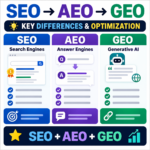
SEO vs. AEO vs. GEO / Key Differences and How to Use Them
Compare SEO, answer engine optimization, and generative engine optimization, then learn how clear answers, credible evidence, and useful structure support all three.

Does Mass-Produced AI Content Hurt Search Rankings? Google and Bing Policies
AI-assisted content is not penalized simply because AI was used. Learn how Google and Bing treat scaled content, which publishing patterns create risk, and how to build a responsible review workflow.

How to Convert Images to WebP / PhotoScape X and Online Tools
Learn how to convert JPG and PNG images to WebP with PhotoScape X or a browser-based tool, choose a useful quality setting, and avoid common publishing problems.

Blogging in the AI Era: A Practical Content and Traffic Strategy
How can blog owners stay useful as AI search changes discovery? Learn how to build distinctive posts, improve existing content, create return paths, and measure results that matter.

Google Analytics / How to Exclude a Specific IP Address in GA4
Exclude your home, office, or development traffic from GA4 by defining internal IP addresses and testing an exclusion data filter before activation.