What Is Affiliate Marketing? A Beginner's Guide for Bloggers
Affiliate marketing is a way for a publisher to earn a commission by recommending a product or service and sending a reader through a tracked link. A click alone does not automatically generate income. The reader must complete an eligible action—such as a purchase or sign-up—and the affiliate program must approve it under its own rules.
What is affiliate marketing?
Affiliate marketing generally involves a merchant that offers a product or service, a publisher that recommends it, and a reader who decides whether to act. An affiliate network may sit between the merchant and publisher to manage applications, links, tracking, reports, and payments. Some merchants run their own programs instead.
For example, a blogger might compare several tools that solve a reader's problem and link to one through an affiliate program. Even if a reader buys after following that link, the purchase must satisfy the program's tracking and eligibility rules before a commission is confirmed. The Amazon Associates Operating Agreement is one example of a program that pays for qualifying purchases or other specified actions; its particular terms should not be assumed to apply elsewhere.
How does an affiliate commission become payable?
There are several steps between publishing a recommendation and receiving a payment. The sequence below is typical, but attribution windows and approval criteria vary by program.
- Join a program and obtain a tracking link. The publisher registers an eligible site or channel, reviews the terms, and gets a link associated with their account.
- Place the link in relevant content. A useful article explains the product's purpose, limitations, and selection criteria before inviting the reader to visit the merchant. It also makes the financial relationship clear.
- The reader completes a qualifying action. Depending on the offer, that might be a purchase, a sign-up, or another valid action. Many sales-based programs do not pay for a click by itself.
- The program validates the action and pays according to its schedule. Duplicate, ineligible, canceled, or refunded transactions may be excluded. For instance, Amazon Associates' returns and refunds guidance explains that returns can reduce previously recorded commissions.

For that reason, treat clicks and pending conversions as indicators, not final earnings. Check approved transactions and actual payment reports separately.
Which actions can earn a commission?
Programs define their own payable events. The categories below describe common structures, not universal rates or approval rules.
| Commission basis | How it works | What to check |
|---|---|---|
| Qualified sale | An eligible purchase produces a percentage of the sale or a fixed payment. | Eligible products, attribution period, completed order requirements, cancellations, and refunds. |
| Qualified lead or sign-up | A valid registration, application, or inquiry earns a payment after approval. | Duplicate leads, verification requirements, customer eligibility, and review period. |
| Other campaign-specific actions | Some programs define a different payable event for a particular campaign. | Read the offer's terms rather than assuming that a click is payable. |
A recorded purchase and an approved commission are not necessarily the same thing. When comparing programs, look beyond the advertised rate to the event that qualifies, the reasons a conversion may be rejected, and the payment schedule.
How can a blogger get started?
It is usually easier to learn the process with one program that fits your existing subject matter than to fill a new blog with unrelated product lists.
- Start with a reader's problem. If your blog covers website tools, a useful question might be, “Which features does a beginner actually need?” A high commission is not a sound reason to recommend a product that does not answer that question.
- Read the program terms. Check eligibility, approved promotional channels, rules for links and images, prohibited claims, qualifying events, payment timing, and how terms may change. Requirements may differ by program and country.
- Create content that helps someone decide. In a comparison, state your criteria and who each option suits. In a how-to article, include prerequisites and ways to verify the result. If you have not used the product, do not write as if you have; distinguish analysis of official materials from first-hand testing.
- Disclose the relationship and test the link. Make a possible commission clear before readers rely on the recommendation, and confirm that the link opens the intended destination. Apply the appropriate link attribute for search engines as well.
- Review approved outcomes and content quality together. Keep clicks, actions, approvals, and reversals separate. If clicks do not lead to valid outcomes, first ask whether the article matches the reader's needs and accurately describes the offer, rather than simply making the sales language stronger.
How do you keep recommendations trustworthy?
Disclose your financial relationship clearly
If you may earn a commission from an affiliate link, tell readers in a place they are likely to notice while evaluating the recommendation. The U.S. Federal Trade Commission's disclosure guidance says material connections should be made obvious and disclosures should appear with the endorsement rather than only on an About page or at the end of a post. Other jurisdictions and affiliate programs may impose additional requirements, so check the rules that apply to your audience and channel.
For an article that actually contains affiliate links, a plain-language notice near the beginning could say: “This article contains affiliate links. If you make a qualifying purchase through them, I may earn a commission.” This is an example of a disclosure, not a claim that this explainer contains affiliate links. A disclosure should also use the same language as the recommendation and accurately describe the relationship.
Mark affiliate links with rel="sponsored" so search engines can understand the paid relationship. If a link opens in a new tab, noopener noreferrer can be used alongside it. Google Search Central's outbound-link guidance recommends the sponsored value for advertising or paid placements. An HTML attribute does not replace a disclosure that people can read.
Explain both the evidence and the limits
A recommendation is more useful when it explains who a product is for—and who may be better served by another option. If you tested a product yourself, say when and under what conditions, and distinguish what you observed from what you could not verify. If you did not test it, consult official specifications and terms rather than implying personal experience.
Copying a merchant's description and adding a link rarely helps a reader make a better decision. Google's spam policies distinguish thin affiliate pages that add little value from content with useful original information. The point is not to add more links, but to contribute meaningful comparisons, context, or decision criteria.
What are the main limitations?
- Income is not guaranteed. Visits and clicks do not become payable unless a qualifying action is approved.
- Returns and cancellations matter. A pending commission may later be reversed, so separate estimated earnings from confirmed payments.
- Program terms can change. Review commission rates, promotional rules, link formats, and program availability periodically. Reliance on a single program increases exposure to changes.
- Reader trust comes first. Recommending only the highest-paying offers or hiding drawbacks makes the article less useful, even if it attracts short-term clicks.
The first step in affiliate marketing is not to add as many links as possible. Define the reader's problem, understand the program's conditions, and explain both your recommendation and your financial relationship. Then judge success by whether the content supports an informed choice as well as by approved—not merely reported—conversions.

Does Mass-Produced AI Content Hurt Search Rankings? Google and Bing Policies
AI-assisted content is not penalized simply because AI was used. Learn how Google and Bing treat scaled content, which publishing patterns create risk, and how to build a responsible review workflow.

WordPress vs Tistory: Costs, AdSense, Control, and Migration
Compare WordPress and Tistory on cost, maintenance, AdSense approval and ad rules, search visibility, and portability. Use practical criteria to choose the right blogging platform for your plans.

What Are Stock Content Sites? Five Platforms and Image Licensing Basics
Learn what stock-content sites offer and how Adobe Stock, Shutterstock, Getty Images, iStock, and Alamy differ. Check free and royalty-free terms, editorial limits, and image rights before you download.

How to Convert Images to WebP / PhotoScape X and Online Tools
Learn how to convert JPG and PNG images to WebP with PhotoScape X or a browser-based tool, choose a useful quality setting, and avoid common publishing problems.

What Is Affiliate Marketing? A Beginner's Guide for Bloggers
Learn how affiliate links, qualifying actions, and approved commissions work. This guide also covers choosing a program, writing useful recommendations, and disclosing financial relationships clearly.

Blogging in the AI Era: A Practical Content and Traffic Strategy
How can blog owners stay useful as AI search changes discovery? Learn how to build distinctive posts, improve existing content, create return paths, and measure results that matter.

Google Analytics / How to Exclude a Specific IP Address in GA4
Exclude your home, office, or development traffic from GA4 by defining internal IP addresses and testing an exclusion data filter before activation.
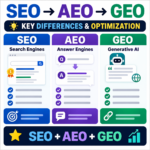
SEO vs. AEO vs. GEO / Key Differences and How to Use Them
Compare SEO, answer engine optimization, and generative engine optimization, then learn how clear answers, credible evidence, and useful structure support all three.